
Kebab barg
Posted: 19 August 2011 Filed under: Kebab-barg, KITCHEN, for recipes, Uncategorized | Tags: booteh_recipes, charoal_barbecue, food_photography, kebab_barg, main_dish, Persian_cuisine 16 CommentsAs a rule, kebab barg is served in restaurants (inside and outside Iran), yet I have figured out how to prepare and barbeque it at home and promise it tastes just as tender and delicious.

Buy a whole tenderloin (filet mignon), and after cleaning it up briefly slice it in cross-sections. The width of each slice should be almost equal to the width of barg kebab, or twice the width of skewer. Read the rest of this entry »
Glittering golden piaz daagh
Posted: 9 August 2011 Filed under: Glittering golden piaz-daagh, KITCHEN, for recipes, Uncategorized | Tags: booteh_recipes, food_photography, Persian_cuisine 3 CommentsSliced fried onions are the base of most Iranian dishes. They are also used to garnish certain types of dishes, notably aash-e reshteh.
 When used as garnish, onions must be prepared and stir-fried in a special way, resulting in a delicate, crunchy and golden piaz daagh so hard to resist munching as a delicious delicacy! Here is how you do it: Read the rest of this entry »
Ranginak, dates and walnuts dessert
Posted: 3 August 2011 Filed under: KITCHEN, for recipes, Ranginak, Uncategorized | Tags: Booshehr, booteh_recipes, dessert, food_photography, Persian_cuisine, Southern_Iran Leave a commentThis dessert which always goes with tea, is specific to southern cities of Iran. It is very nice after ghalyeh

Ingredients: 1 kg. Pitted (peeled if skin is too thick); 250 gr. Walnuts; 1 ½ cups all-purpose flour; ½ cup powdered sugar; ½ cup ground cinnamon, about 1 cup of vegetable oil
Kookoo Sabzi, herbed omelette
Posted: 27 July 2011 Filed under: KITCHEN, for recipes, KooKoo/herbed omelette, Uncategorized | Tags: booteh_recipes, food_photography, kookoo, Persian_cuisine, sidedish Leave a commentThis is the first method I make this dish (second and third will followw in the following months)

Ingredients: Parsley and scallions, chopped (1 big bunch each); cilantro and dill, chopped (1/2 bunch, each); fenugreek, dry or chopped (1 tablespoon); lettuce, chopped (two leave), eggs (5-6); red onion, thinly sliced (1 medium); cooking oil, turmeric, salt and black pepper. Read the rest of this entry »
Typical Iranian breakfast
Posted: 25 July 2011 Filed under: Jams, Yogurt and fruit/veg based, KITCHEN, for recipes, Typical Iranian breakfast, Uncategorized | Tags: breakfast, food_photography 4 Comments
Joojeh kebab on charcoal barbecue
Posted: 21 July 2011 Filed under: Chiken kebab on charcoal, KITCHEN, for recipes, Uncategorized | Tags: booteh_recipes, charcoal_barbecue, chicken, food_photography, joojeh_kebab, main_dish, persian_cooking 4 Comments
Last year we turned our old gas burning barbecue into a charcoal one, in an attempt to recover some of our nostalgic memories of delicious Iranian style kabaabs made on charcoal burning braziers. It was an extremely successful operation with rewarding results!
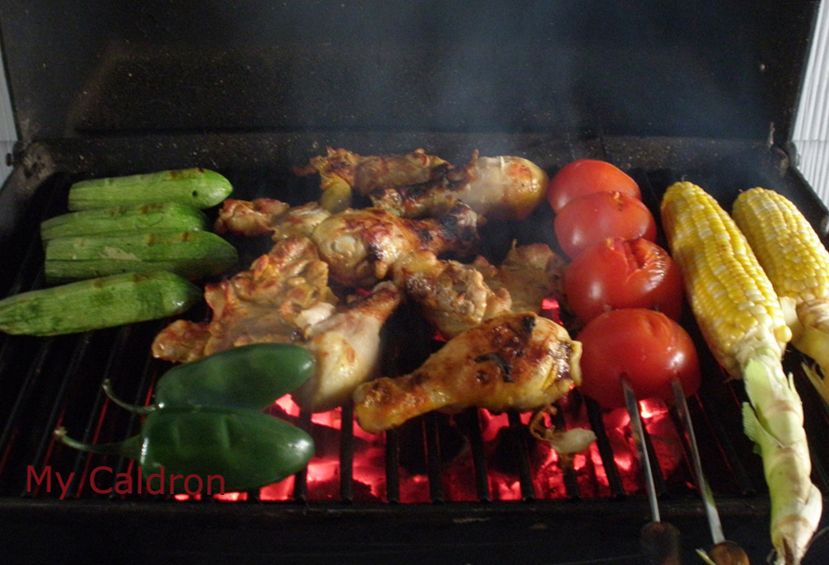
Blessed by a covered carport, which we use as a kind of porch, we now indulge in grilled everything throughout the year. It might not smell “seasonal” to send wafts of grilled chicken or mouth watering skewer meat kebab in minus 30 degrees out in the snow-covered neighbourhood, but
Rice, unbeatable Iranian style
Posted: 14 July 2011 Filed under: KITCHEN, for recipes, Rice, plain and tahdig, Uncategorized | Tags: booteh_recipes, food_photography, main_dish, Persian_cuisine, rice, tahdig 17 CommentsThe high quality rice cooked Iranian style is simply unbeatable. Whether it is mixed polo or plain, white chelo, soaked and drained or not drained (as in kateh or dami), the unique steam-cooking method employed to prepare Iranian-style rice results in a perfection of slender, fluffy grains with a heavenly taste and fragrance.

In addition, tah-dig, the crunchy part of rice, literally meaning “bottom of the pot,” is a by-product , and much loved, of Iranian style rice cooking, which could take several tastes and forms… I have explained all these simple yet delicate points and procedures in a “culinary memoir” linked on the sidebar of this blog. Meanwhile, Read the rest of this entry »
Kookoo with potato
Posted: 11 July 2011 Filed under: KITCHEN, for recipes, KooKoo with potatoes, Uncategorized | Tags: booteh_recipes, food_photography, kookoo, main_dish, Persian_cuisine, sidedish Leave a commentThis is a fast and easy Iranian dish great for supper – at the table, or “for the road”. All my non-Iranian friends love this “Persian pancake”, as they call it. Normally it is made mainly with potatoes, and eggs, but I do add one or two other ingredients.
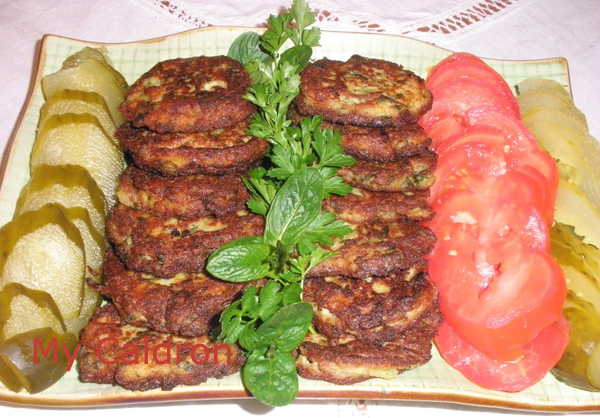
For six relatively hungry people, you would need the following:
- 1 kg regular potatoes;
- 4 eggs;
- 1 small onion;
- 1/2 cup milk;
- 1/2 cup chopped parsley and chives;
- pinch of turmeric; salt, powdered black pepper (desired amount),
- and a lot of cooking oil.
NOTE: Some use baking powder to make koo koo tender. I think it adds an unpleasant taste and elastic feel to it though! Milk and onion (or even onion alone) does a wonderful job making it tender and crunchy. Herbs, however, could easily be skipped without damaging the result. It is just a matter of taste and innovation! Read the rest of this entry »
Jewel-mixed rice
Posted: 9 July 2011 Filed under: Jewel-mixed rice, KITCHEN, for recipes, Uncategorized | Tags: food_photography, main_dish, mixed_polow, persian_cooking, rice, vegan 4 CommentsJewel-mixed polo or ‘morasa polo” is a dish I often make when I want to impress my visitor :), of course served with fried or oven-cooked chicken. It has a unique taste – a bit sweet with the dominant taste of sweetened orange peel. In all fairness, this is quite a complex recipe to start my Persian cooking list with but I love the color so I went for it assuming many of you know the basics. If not, nothing to worry about. I will explain how to prepare plain rice in a separate post shortly.
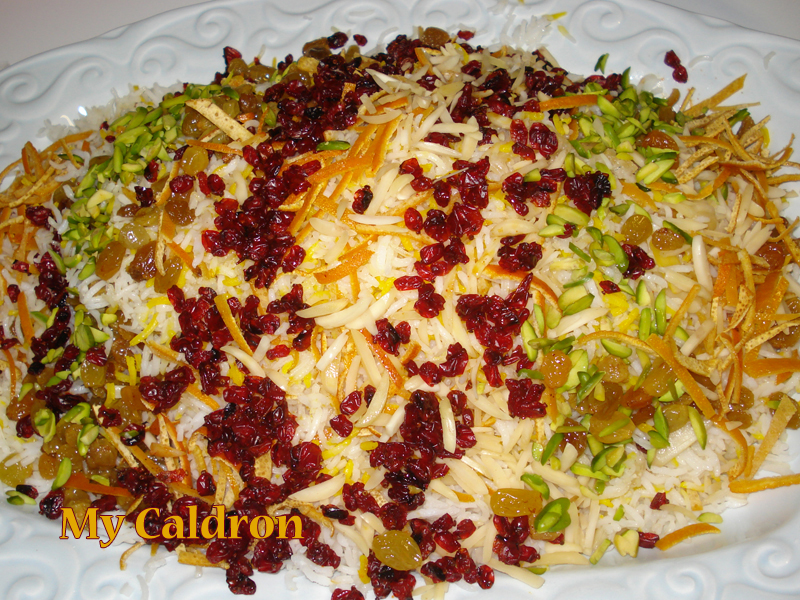
Ingredients (serving five) Read the rest of this entry »
Samosa
Posted: 26 June 2011 Filed under: KITCHEN, for recipes, Samossa, Uncategorized | Tags: food_photography, main_dish, persian_cooking; booteh_recipes, sidedish 2 CommentsSamosa is popular snack in many Iranian cities too, (just as it is in central and south Asia, many African and all Middle eastern countries) In Iran, sambooseh is reputed to be best prepared by Abadanis. Samosa is also largely a savory “street food” – one you would buy in specialized restaurants or off a kiosk or even push card. I make it at home, and it turns wonderful.

Ingredients
- I pack, Lavash or Markouk flat bread. Buy from Middle Eastern stores. One pack contains 4 large bread pieces and each piece would give about ten samosas
- About ¼ cup vegetable oil
- 1 medium sized onion, chopped
- 250 gr. ground beef
- 4-5 medium potatoes
- 1 teaspoon turmeric
- 1 teaspoon powdered black pepper
- Salt to taste
- 1 bunch of parsley, chopped
For the sauce:
- 2 tbsp. tomato paste
- 2 tbsp V8 or tomato juice
- Pinch of powdered chilli
- Pinch of Mustard
- Hot pepper (such as Tabasco) to your taste
Method:
- Cutting the bread
This is the most important step I would say! Take a bread and just as it is folded, cut in four horizontal parts. That will give you four long strips to start working on. Cut each strips in equal sized parallel-gram pieces. These will be your samosa shelves. Soon, you will need to fold each soft shell the way shown in the picture and fill each three-quarter half with the filling.

2. Preparing the filling:
In a medium frying pan warm 1 tbsp. and sauté chopped onions. Add minced ground beef if you are using it. Stir frequently. Once it changes colour, add turmeric and black pepper and keep frying for a few more minutes. Put aside.
Boil potatoes. Skin and chop. Sprinkle enough salt and mix well.
Chop the washed and pat dried parsley.
Mix everything together. This is your filling.
*You can perfectly make a delicious vegan samosa by simply omitting the meat. In this case, you add turmeric and black powder to your frying onion before mixing it with chopped potatoes. All other steps are the same.
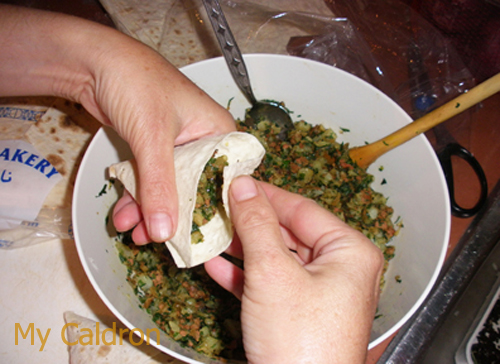
Now, all you need to do is fill the shells one by one, close them with their top parts, and put three or four at the time in a pan already containing hot vegetable oil.
It will take about one minute for each side of the samosa to turn crispy golden. And it takes a lot of oil to get to that perfect golden color without burning it. Remove them from pan and put them in paper towel to extract the excess oil. Never put warm samosas on top of each other.
Serve hot! Absolutely!!

3. Sauce:
Samosa is usually dipped in a very spicy hot sauce. How hot, depends on your taste when you are making it at home. Just mix the ingredients noted above and remember, time makes the sauce hotter; so if like me, you like it hot, make the sauce in advance.
Enjoy!



 My Caldron