
ghormeh sabzi, mixed-herb stew
Posted: 1 December 2011 Filed under: Ghormeh sabzi, mixed herbs stew, KITCHEN, for recipes, Uncategorized | Tags: booteh_recipes, food_photography, ghormeh_sabzi, khoresh sabzi, main_dish, mixed-Herb_stew, Persian_cuisine 9 CommentsGhormeh sabzi, a mixed-herb stew or khoresh, is the signature dish of any Iranian’s kitchen. So much so there is even an anthropological article written entitled “Bastard chicken or Ghormeh Sabzi”, by Lynn Harbottle which I recommend if interested in the strategies Iranian women migrants in UK employ to keep their family healthy through good food and Persian cooking. Now, My recipe:

Ingredients: (serving 5-6) Read the rest of this entry »
Dill/beans mixed-polow with fish
Posted: 18 November 2011 Filed under: Dill/beans mixed-rice with fish, KITCHEN, for recipes, Uncategorized | Tags: booteh_recipes, fish, food_photography, maahi, main_dish, mixed_polow, Persian_cuisine, shivid_polo, Southern_Iran 2 CommentsI can eat this mix-polow as a complete main dish, but it is very common to have it with fried fish in the southern part of Iran. It might also be served with large chunks of boiled or baked beef or even fried and steam-cooked chicken.
 Ingredients (serving 3)

Barbari Bread
Posted: 30 October 2011 Filed under: Barbari Bread, KITCHEN, for recipes, Uncategorized | Tags: food_photography, naan_barbari, Persian_cuisine 85 CommentsMake me very tenderly, and stretch me very long… bake me to the end of love! Recipe In Persian
 I took this recipe from a friend of mine who has in turn taken it from somewhere else but developed it over the years (yes, years!) to the point of perfection. When I first went through his well-organized and gorgeous pictures, I noticed he must be in love with barbari bread or with baking in general, or perhaps just in love! The instructions he gave for treating the dough with tenderness, and forming it with bare hands and fingers, and the evocative descriptions of the bread’s scents and sights were all indications of a very special type of bread and bread making. Well, I tried his recipes a couple of times, before I really came to the conclusion that yes, to bake this barbari in its perfectly original taste and texture, you must absolutely be gentle, caring and patient- you must be truly in love with it! Try it and you will know what I mean.
Yogurt soup
Posted: 26 October 2011 Filed under: KITCHEN, for recipes, Uncategorized, Yogurt soup | Tags: aash_maast, booteh_recipes, food_photography, Persian_cuisine, shiraz, sidedish Leave a commentThis is yet another Shiraz speciality, although in other Iranian cities we have “aash maast” (yogurt soup) which follow completely different ingredients and cooking methods.

Ingredients (serving 4) Read the rest of this entry »
Shrimp-Onion dish
Posted: 18 October 2011 Filed under: KITCHEN, for recipes, Shrimp-Onion dish, Uncategorized | Tags: booteh_recipes, food_photography, main_dish, Persian_cuisine, shrimp, Southern_Iran Leave a commentThis is another exciting southern Iran speciality, provoking a lot of “home” memories. It is eaten with bread, which means it is usually prepared for supper, but no written rule about it. It is nutritious, delicious, gorgeous and very easy and fast to prepare.

- Ingredients (for 2-3): Read the rest of this entry »
Kebab koobideh
Posted: 15 October 2011 Filed under: Kebab koobideh, KITCHEN, for recipes, Uncategorized | Tags: booteh_recipes, food_photography, kebab_koobideh, main_dish, Persian_cuisine 6 CommentsKebab Koobideh is probably the most renowned Iranian dish and certainly one of the most popular ones both on tables and in Persian cooking sites. Like kebab barg, koobideh is a restaurant dish; however it is more commonly made at home. Why? I really don’t know because to me barg is less tricky and more difficult to spoil. Ok, let’s get started and I’ll explain what I mean:
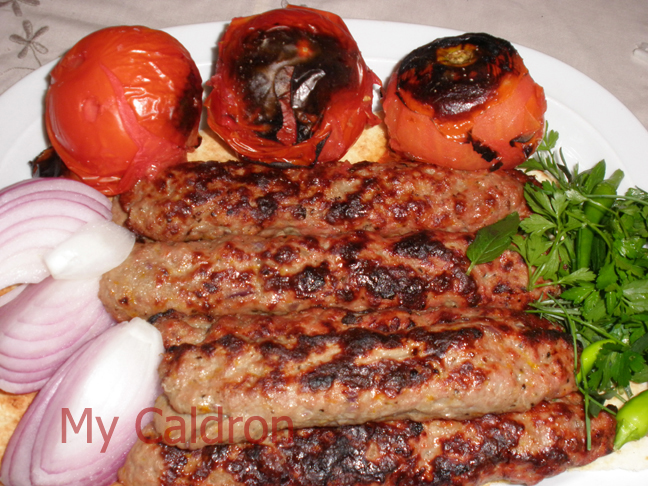
- Ingredients: (serving 2-3): Read the rest of this entry »
The pleasure is ALLLLL mine!
Posted: 10 October 2011 Filed under: COZY CORNER, Memories & Events, Uncategorized | Tags: friends, Persian_cuisine 2 Comments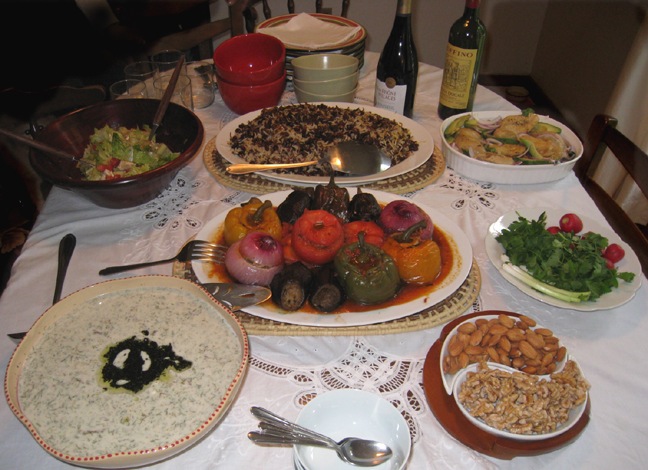 When I cook and it turns out well, for the friends just ringing the bell,
when we sit ‘n’ start to laugh, over a glass or two and a half,
when I see their faces glow, with the sight of my adas polow,
When I hear their cheerful praise, for every item they delicately taste,
What can I say, but “it’s my pleasure!”, the joy I receive is beyond measure!
Stuffed vegetables (dolmeh1)
Posted: 4 October 2011 Filed under: KITCHEN, for recipes, Stuffed vegetables (dolmeh1), Uncategorized | Tags: booteh_recipes, dolmeh, Persian_cuisine, stuffed_vegetables 1 CommentBasically, any vegetable that can be filled (eggplants, bell peppers, tomatoes, squash, onions) or can be wrapped (grape leaf, cabbage) with specific filling makes the gorgeous looking and savory dolmeh. This dish is not specific to Iran, but Iranians have their own ways of preparing it.
 The filling for all types of dolmeh is the same and the preparation methods are quite similar. The cooking time for different vegetables is different though. The point is that once you prepare the filling, it is a good idea to make plenty of it and make a little bit of extra effort to use a diverse set of vegetables. The result will be quite impressive I assure you 🙂
Ingredients: Read the rest of this entry »
Red-lentil stew, vegetarian with tamarind
Posted: 27 September 2011 Filed under: KITCHEN, for recipes, Red-lentil stew (Daal adas), Uncategorized | Tags: Bushehr, food_photography, khoresh, main_dish, Persian_cuisine, red_lentil, vegan, vegeterian 2 CommentsDaal adas is one of the rare meatless Iranian stew and is very popular in South and South-west Iran (Bushehr, Hormozgan and khuzestan provinces), where food is generally more spicy than other parts of the country.
 Like any given khoresh or dish, daal adas is prepared in different ways in various households. The way my Bushehri mom used to cook it, often when she was in hurry, is the one I came to like and learn.
Ingredients: (serving 4-5):
- Red lintel, 2 cups.
- Onion, 1 medium, thinly sliced.
- Potato, 1 medium, skinned and cut in four pieces.
- Garlic cloves (ideally green or fresh) 3-4 cloves, finely minced.
- Tomato sauce 1/2 tbsp. (or one cup of V8).
- Tamarind sauce, 3 tbsp (see note and picture below).
- Turmeric, ½ tbs.
- Powdered red pepper, 1/4 tbsp.
- Salt, to the taste.
- Cooking oil, 5 tbsp.
- Water, 4 cups, or 3 cups if you are using V8
Note: I buy fresh tamarind from Middle Eastern stores; they taste wonderful (more sour than sweet) and are very rich. For this recipe, I use one long pod, skin and soak it in 2-3 tbsp of hot water. After 15 minutes, I just squeeze the pod and use the extracted juice for my daal stew.
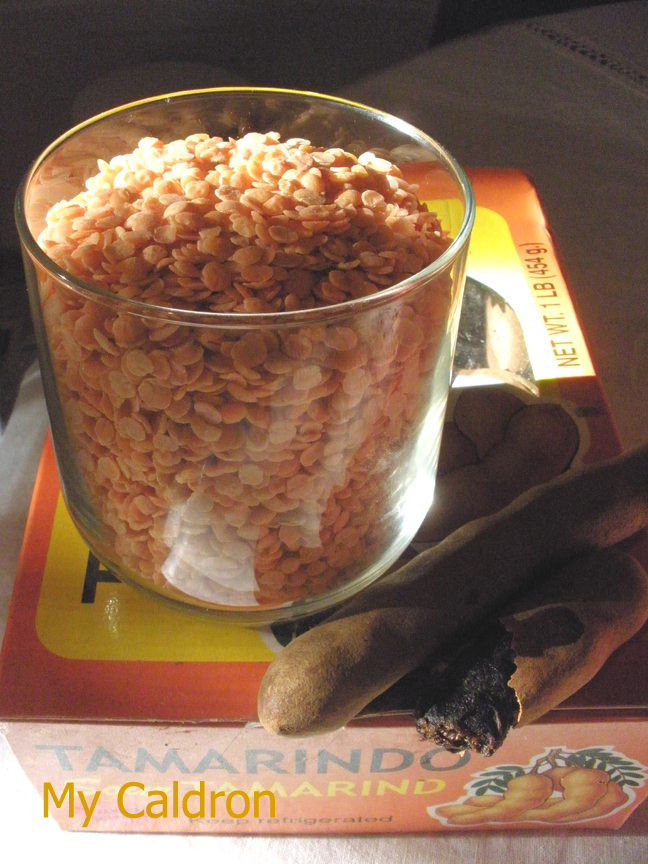 Method: Wash the red lentils in cold water by raking with fingers and rinsing until the water runs clear. In a pot, add lentil, potatoes, water/V8, , and salt. Bring to boil and turn to medium heat and cook for half an hour or until the potatoes are soft. With the back of a spoon smash the potatoes against the pot and turn off the heat.
While your lentil is cooking prepare your piaz daagh: That is, in a frying pan sauté onions in hot oil until slightly golden. Stir frequently. Add garlic and sauté just long enough to release the scent. Be careful not to burn them or let them turn brownish because black spots would not look nice in the stew. Add turmeric and red pepper and mix well for two more minutes while still frying. Add fried onion and garlic, as well as the tomato’s paste (if you did not use V8) and tamarind sauce to the pot. Simmer for 5 minutes until you get a homogeneous thick soup. Taste for adjustment. It is ready to be served, with plain rice, of course!
Roman-beans dish, for the love of the good old days
Posted: 19 September 2011 Filed under: Kidney-beans dish, KITCHEN, for recipes, Uncategorized | Tags: food_photography, Iranian_chaser, mazeh, Persian_cuisine, sidedish, vegan 2 Comments
This is a side dish and a favorite chaser or mazeh among many Iranians; it goes particularly well with the Iranian hard liquor, aragh. A mazeh should be spicy and delicious of course, and should ideally contain a lot of protein. Charcoal-grilled lamb’s liver (jegar) for instance is another renowned mazeh. In Iran, Kidney beans dish is by tradition prepared and sold by restaurant, bars (when we had them) and street venders. However, khoraak looia is very easy to prepare at home; it is nutritious, tasty and always good to have as a side dish, or even on its own.

Ingredients: Read the rest of this entry »



 My Caldron